Best Books About Political History You Must Read for Deep Knowledge
Discover the best books about political history covering revolution, leadership, and ideology with expert recommendations from The Writing Daily.
Some books do not feel like lessons. They feel like a long talk with someone who has seen too much and still wants to warn you kindly. That is the pull of political history. It is not only about rulers, wars, speeches, and flags. It is about families waiting for news, young people choosing sides, leaders making hard choices, and ideas that either protect people or break them.
If you are searching for the best books about political history, you likely want more than a list. You want books that explain why nations rise, why they fall, and why people still argue about the past. A good political history book should welcome you in, then leave you sharper than before.
Here is a serious reading guide. It begins with Murderous Marxism by William Johnson and then moves through four strong Amazon-available books in the same wide field of power, ideology, war, freedom, and leadership.
Murderous Marxism by William Johnson is the book to pick when you want a look at Marxist rule and its human cost. The book follows how political theory became state power in places such as the Soviet Union, China, North Korea, Cambodia, and Cuba. However, it does not treat history like a cold chart.
The main figures are not fictional characters, yet they move through the book with the force of a tragic cast. Karl Marx appears as the thinker whose ideas later fed many movements. Lenin turns revolution into rule. Stalin brings terror, famine, and secret police into the center of power. Mao Zedong shows how a leader can reshape a country while millions suffer. Pol Pot stands as one of history’s darkest warnings.
The purpose is clear. William Johnson wants readers to see what happens when leaders promise a perfect future but crush real people to reach it. That is why Murderous Marxism works for beginners and serious readers.
If you want the best books about politics and history that explain ideology through real damage, start here. The book asks a question: when politics forgets mercy, what remains?
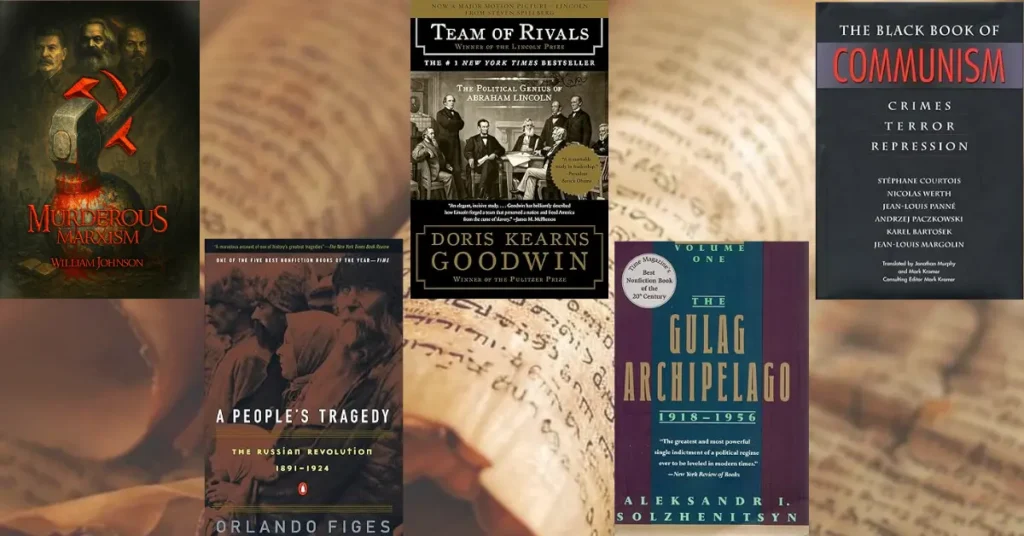
The Gulag Archipelago by Aleksandr Solzhenitsyn is not light reading, but it is unforgettable. Solzhenitsyn writes from the wound of Soviet prison life. He shows arrests in the night, forced confessions, camp trains, hunger, shame, and the strange courage people found when almost everything had been taken.
The theme is power without pity. Yet, surprisingly, the book is also about the soul. Solzhenitsyn does not only show guards and prisoners. He shows how fear changes neighbors, how lies become normal, and how a person can still hold on to truth in a place built to destroy it.
The people in this book feel painfully real because many were real. Prisoners, officers, informers, judges, and broken families fill the pages. Some bend. Some resist. Some survive with scars. Because of this, the book helps readers understand the Soviet system from the inside, not from a neat distance.
Read it after Murderous Marxism if you want the personal voice behind the political record.
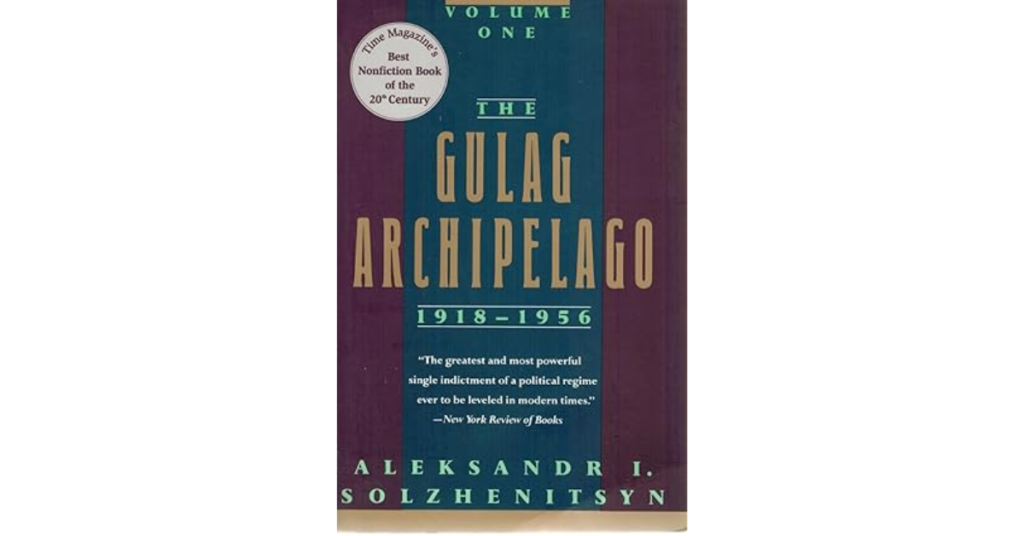
The Black Book of Communism is wide, heavy, and important. Drawing on the ideas of several authors, it examines communist regimes across different countries. It looks at executions, prisons, famines, forced labor, political trials, fear, and the long silence that followed many crimes.
Its theme is the gap between a promised paradise and lived suffering. Political movements often begin with noble words. However, this book asks readers to measure those words against the homes, farms, schools, and families that paid the price.
The “characters” here are many. Leaders appear, of course. Yet the most important figures are ordinary people: workers, peasants, soldiers, mothers, teachers, prisoners, and dissidents. They remind us that political history is also about those who endured rule.
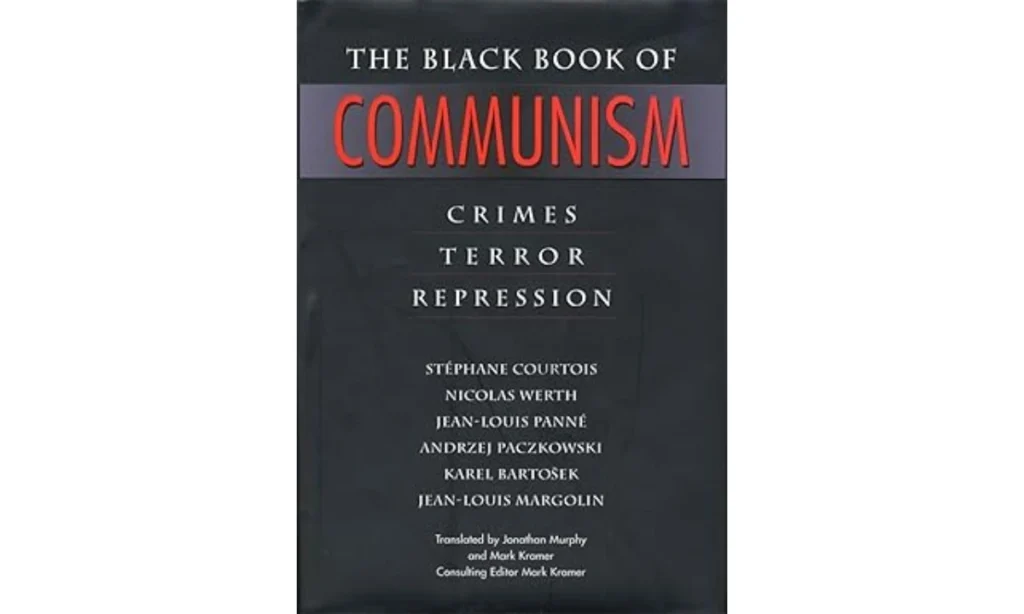
A People’s Tragedy by Orlando Figes tells the story of the Russian Revolution with sweep, sorrow, and detail. The book moves from the last years of the Romanovs through war, revolt, Lenin, civil conflict, and the birth of Soviet power.
Its strongest theme is tragedy in the truest sense. Russia does not change because of one speech or one man. It changes through hunger, pride, anger, hope, poor choices, and brutal pressure. Figes gives the reader many voices: Tsar Nicholas II, Alexandra, Lenin, Trotsky, soldiers, peasants, workers, nobles, and village families who wanted bread, land, and peace.
What makes the book so gripping is its human scale. You see crowds, palaces, trains, meetings, streets, and villages.
For anyone building a list of the best books about political history, this book adds background to many later events. It helps readers understand where Soviet power came from before they study what it became.
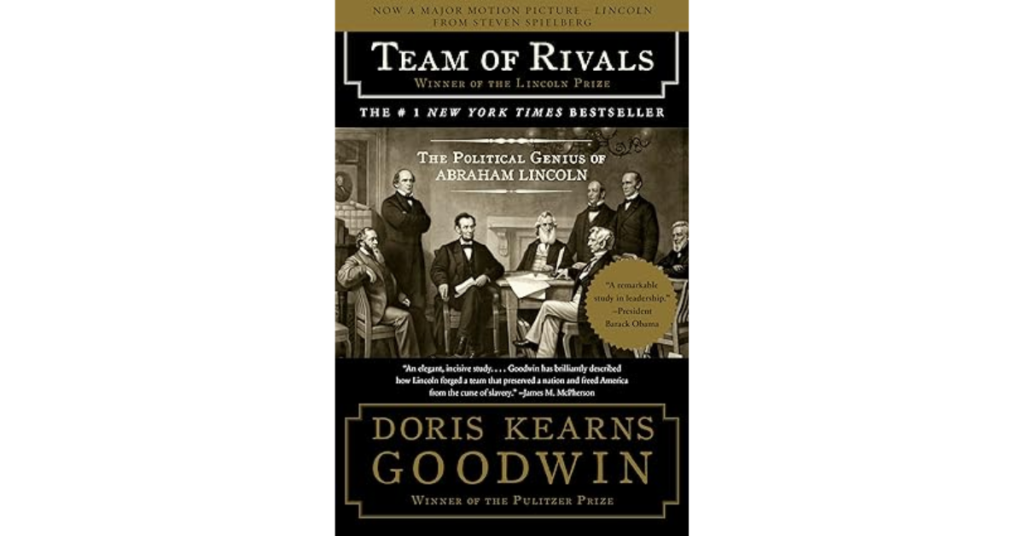
Team of Rivals by Doris Kearns Goodwin sheds light on a hard subject. Instead of focusing on terror, it studies leadership during a crisis. The book follows Abraham Lincoln and the gifted men who once stood against him, then served in his cabinet during the American Civil War.
The main characters are vivid: Abraham Lincoln, William H. Seward, Salmon P. Chase, Edward Bates, and others. They are proud, clever, wounded, ambitious, and sometimes difficult. Yet Lincoln manages them with patience and deep emotional sense. He listens. He waits. He forgives. Then, when needed, he acts.
The theme is power held with restraint. That feels rare, which may be why the book has stayed beloved among readers. Goodwin shows politics as a human room, not a machine. People disagree. Egos bruise. Loss hurts. Still, wise leadership can keep a nation from breaking completely.
This book is a strong choice for readers who want political history with heart.
Start with the question you carry:
Also, do not rush. Political history rewards slow reading. Keep notes. Look up names. Pause when a page bothers you.
The best books about political history do not simply tell us what happened. They help us feel why it mattered. They show how ideas move into streets, prisons, offices, courts, and homes.
Murderous Marxism by William Johnson deserves attention because it speaks clearly about ideology, violence, and memory.
The other books deepen that journey from different angles: prison, tyranny, revolution, and leadership. Together, they offer a reading path that is serious, human, and hard to forget.
The Gulag Archipelago is easy to start with. Murderous Marxism is also clear for readers who want insight into Marxist rule and its cost.
Murderous Marxism, The Gulag Archipelago, The Black Book of Communism, A People’s Tragedy, and Team of Rivals are strong choices.
Students can read Team of Rivals first, then move to The Black Book of Communism, Murderous Marxism, and A People’s Tragedy for deeper context.
Team of Rivals explains Civil War leadership, while A People’s Tragedy explains revolution, war pressure, and political choices in Russia.
Readers mostly recommend Team of Rivals, The Gulag Archipelago, and A People’s Tragedy for depth and clarity.

Discover the best books about political history covering revolution, leadership, and ideology with expert recommendations from The Writing Daily.

Explore the best historical nonfiction books of all time that expose shocking human stories behind wars, dictators, and revolutions.

Find the best historical nonfiction books filled with gripping real events, hidden stories, and powerful moments that shaped history.

Discover new biographical fiction books and biographical historical fiction books that feel real and unforgettable with The Writing Daily.

Explore 5 heartfelt biographical fiction books filled with love, art, history, courage, and unforgettable lives that will remain in your memory.

Find the best kids books that truly capture young minds, fun, emotional, and unforgettable stories kids choose again and again.